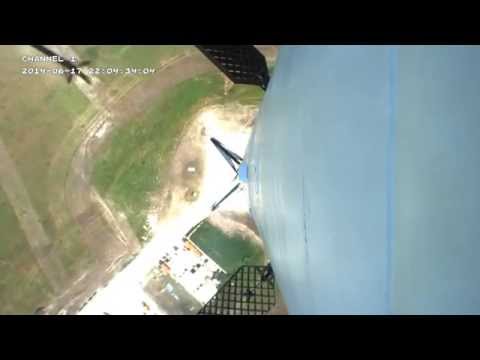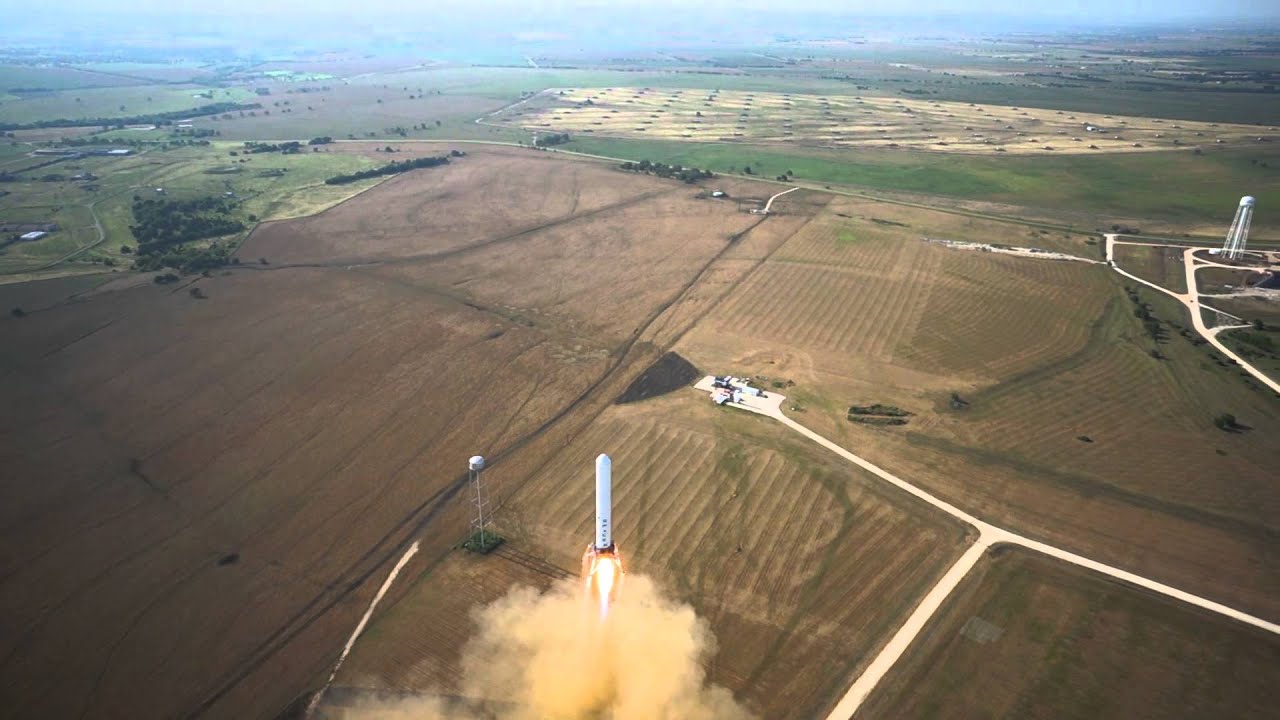
Grasshopper 325m Test | Single Camera (Hexacopter)
Pourquoi cette vidéo a été sélectionnée
Partagée sur Hacker News (156 points, 45 commentaires). Citée dans les discussions Hacker News par 2 personnes distinctes entre 2013 et 2014. Chaîne officielle : SpaceX. Points forts estimés : contenu durable.
Recommandations à l'origine de la sélection
- Hacker News : « SpaceX's Grasshopper Successfully Flew 325 Metres » — 156 points, 45 commentaires, 2013
- Hacker News : « SpaceX Grasshopper 325m Test » — 13 points, 2013
- Hacker News : « SpaceX Grasshopper - latest test, 325m » — 8 points, 1 commentaires, 2013
- @amitparikh2013· dans « Elon Musk to publish hyperloop design by August »
… [1], a reusable first stage that is capable of returning to the launchpad under controlled burn. [1] Here's the most recent 325m test: https://www.youtube.com/watch?v=eGimzB5QM1M
Voir sur Hacker News - @chvvel8432014· dans « Ask HN: Is escape velocity required to get to outer space? »
…sed on arguments. You, on the other side, do not have any arguments... your only argument is that I am trolling. Look, check this video: http://www.youtube.com/watch?v=eGimzB5QM1M This is how it works - at one point the rocket has 0 velocity, but does not fall back to earth.…
Voir sur Hacker News
Description de l'auteur — Afficher plusAfficher moins
On June 14, SpaceX's Grasshopper flew 325 m (1066 feet)--higher than Manhattan's Chrysler Building--before smoothly landing back on the pad. For the first time in this test, Grasshopper made use of its full navigation sensor suite with the F9-R closed loop control flight algorithms to accomplish a precision landing. Most rockets are equipped with sensors to determine position, but these sensors are generally not accurate enough to accomplish the type of precision landing necessary with Grasshopper. Previous Grasshopper tests relied on the other rocket sensors but for this test, an additional, higher accuracy sensor was in the control loop. In other words, SpaceX was directly controlling the vehicle based on new sensor readings, adding a new level of accuracy in sensing the distance between Grasshopper and the ground, enabling a more precise landing. Grasshopper is a 10-story Vertical Takeoff Vertical Landing (VTVL) vehicle designed to test the technologies needed to return a rocket back to Earth intact. While most rockets are designed to burn up on atmosphere reentry, SpaceX rockets are being designed not only to withstand reentry, but also to return to the launch pad for a vertical landing. The Grasshopper VTVL vehicle represents a critical step towards this goal. Grasshopper consists of a Falcon 9 rocket first stage tank, Merlin 1D engine, four steel and aluminum landing legs with hydraulic dampers, and a steel support structure.
Détail de la note
| Pertinence thématique | 88 | Pertinence thématique estimée à 88 % (univers principal : autres-vehicules) |
| Profondeur technique | non mesurable | Aucun signal détecté dans les métadonnées (non mesurable) |
| Qualité pédagogique | non mesurable | Aucun signal détecté dans les métadonnées (non mesurable) |
| Intérêt historique | non mesurable | Pas de dimension historique détectée (non mesurable) |
| Originalité | non mesurable | Non mesurable sans analyse par modèle de langage |
| Crédibilité de l'auteur | 65 | SpaceX : chaîne officielle (confiance 65/100) |
| Recommandations indépendantes | 100 | 5 recommandeurs distincts ; soumission votée 156 fois |
| Recommandations dans la durée | 50 | Recommandée sur 2 mois distincts, 2 années différentes |
| Valeur durable | 80 | Contenu durable |
| Rareté | 25 | 3 838 873 vues sur YouTube |
| Fraîcheur | non mesurable | Sans objet pour un contenu durable |
Confiance 58 % · score-v1 · heuristic-2026.11.1 · méthode